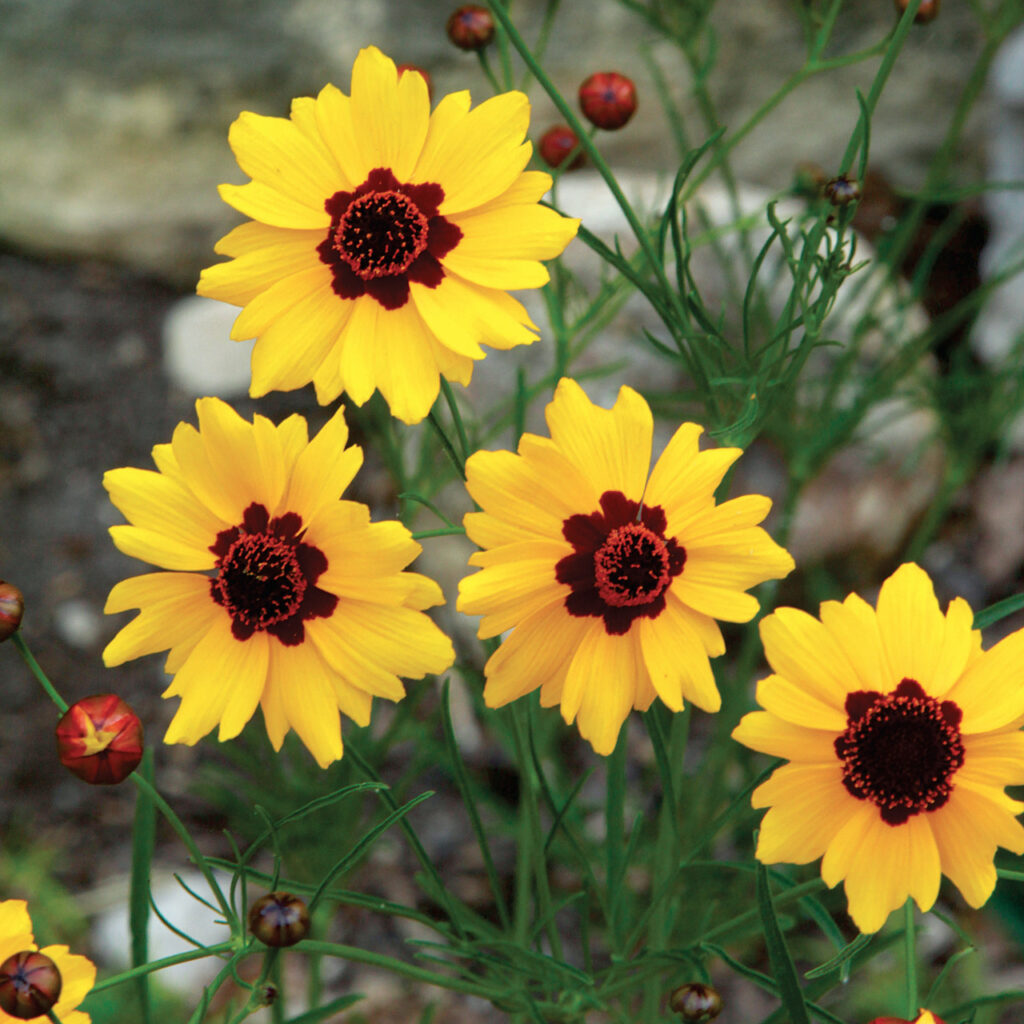
Coreopsis tinctoria – Plains Coreopsis
A slender, 1-2 ft., annual with pinnately-compound foliage, small but abundant yellow flowers, maroon near the center. Flower heads occur on long stalks from the multi-branching stems.
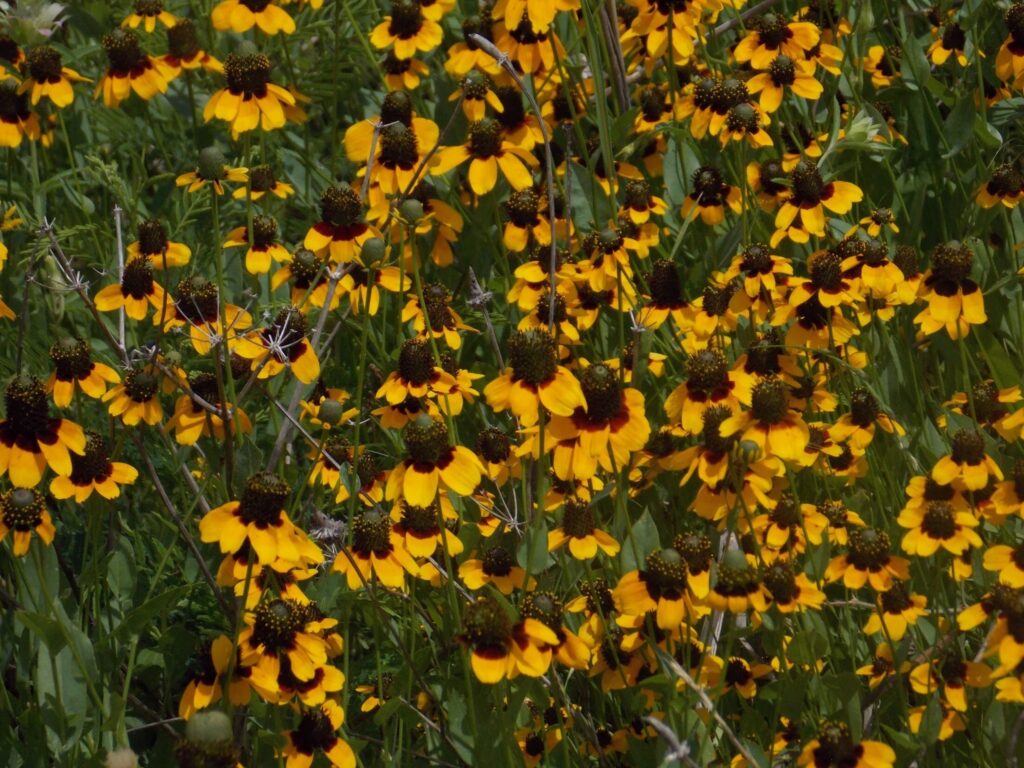
Dracopis amplexicaulis – Clasping Coneflower
is a smooth-stemmed, annual coneflower, usually 2-3 ft. tall, with terminal, solitary flower heads. The leaves are oblong with heart-shaped, clasping bases. The yellow petals, with reddish-purple bases, are numerous and droop away from the dark, elongated, cone-shaped center.
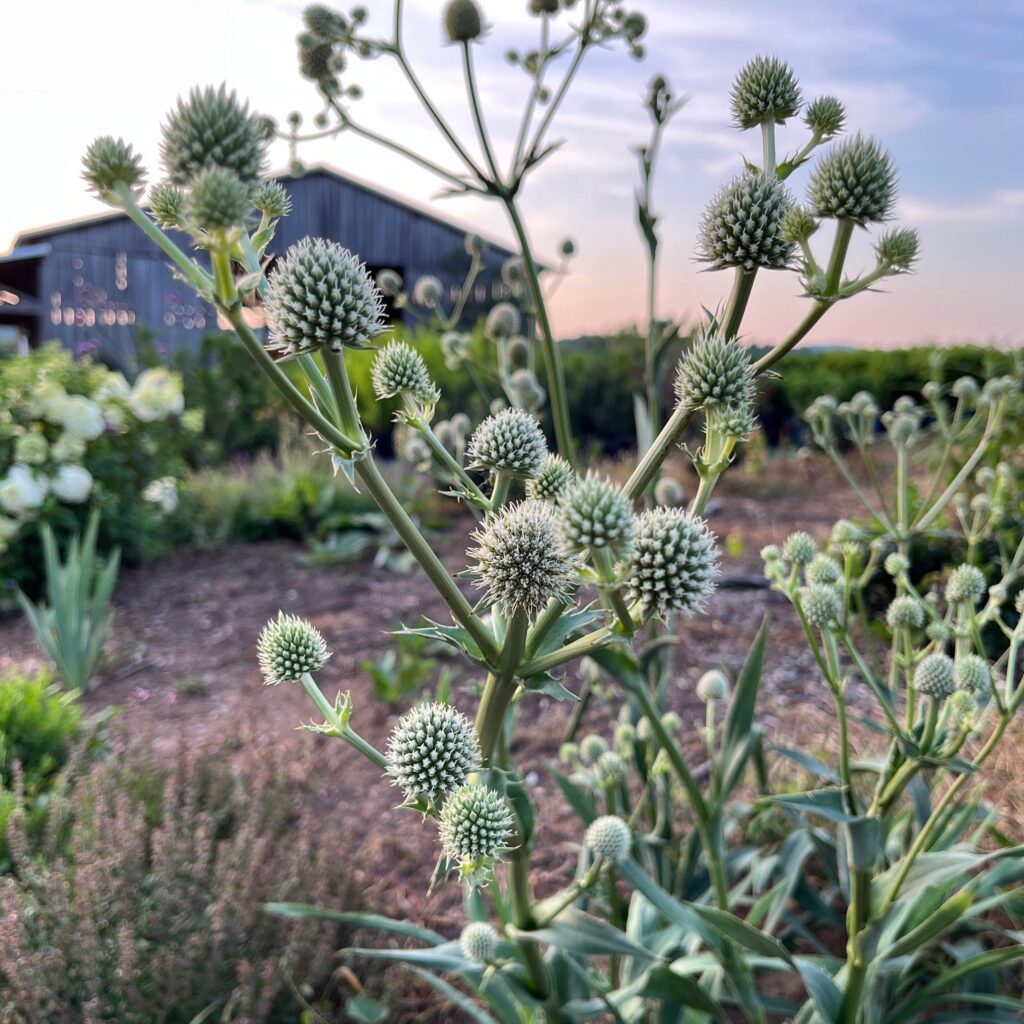
Eryngium yuccifolium – Rattlesnake Master
has smooth, rigid stems that bear thistle-like flower heads made up of small greenish-white florets mingled with pointed bracts. The individual, greenish-white flowers cluster into unique, globular heads. These occur on branch ends atop the 6 ft. plant. It can be an aggressive self-seeder.
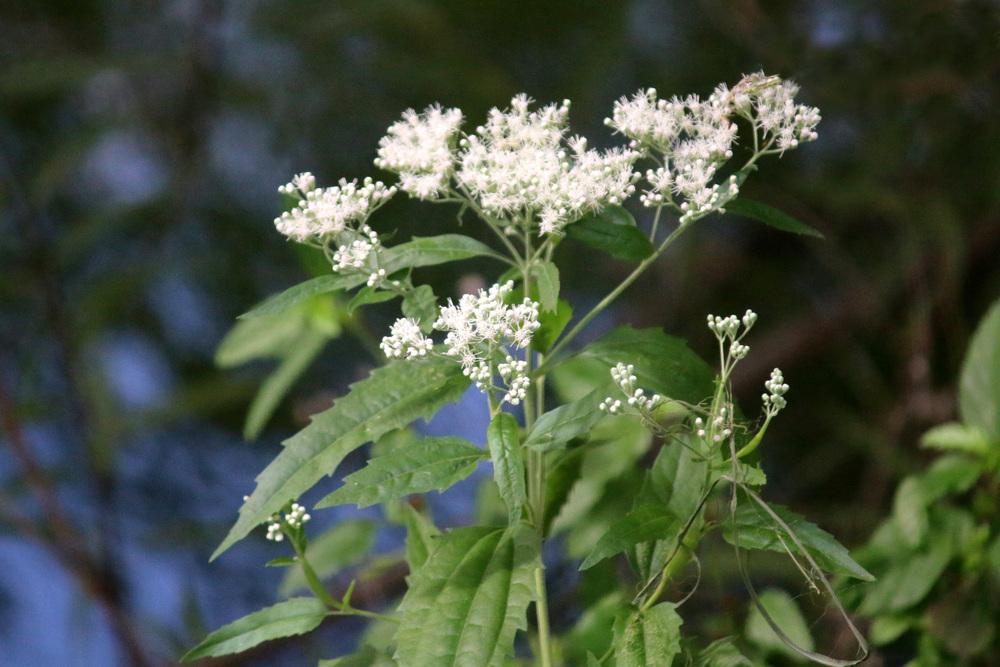
Eupatorium serotinum – Late Boneset
is a member of the aster family. Flowers small, but organized into larger heads resembling a single, radially symmetrical flower cupped by a ring of green bracts. Flower-like heads: tiny, radially symmetrical central flowers form the disc; larger flowers around the edge, the rays, strap-shaped and resembling petals; however, all flowers in one head may be disc flowers or rays. Grow in part shade, moist sandy loam to clay soils. Grows by rhizomes.
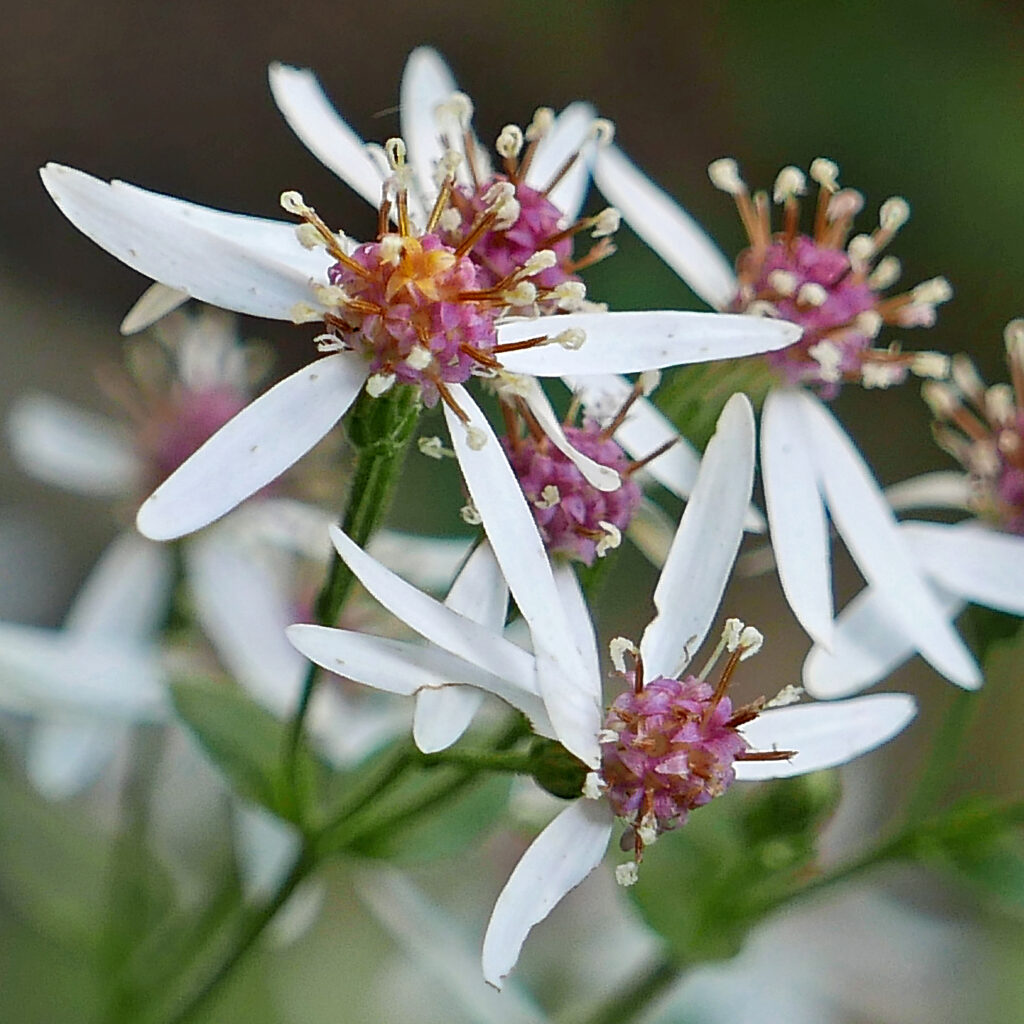
Eurybia divaricata – White Wood Aster
typically grows in the wild in dry open woods. It grows in loose clumps with dark, sprawling, sometimes zigzag stems up to 2.5′ tall. Distinctive leaves are heart-shaped, stalked and coarsely toothed. Small but abundant flowers (to 1 inch across) have white rays and yellow to red center disks and appear in flat-topped, terminal clusters in late summer to early fall. Attractive to butterflies.
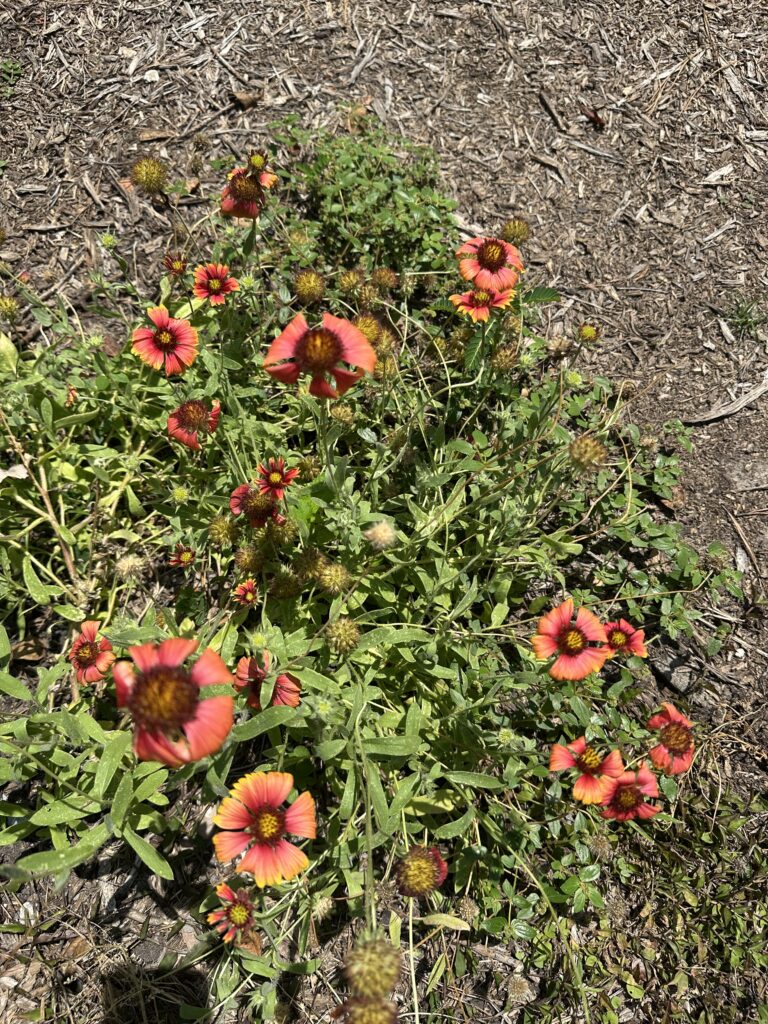
Gaillardia – Blanket Flower
is a group of short-lived perennial plants in the Asteraceae (daisy) family native to North and South America. These plants need good drainage in full sun to thrive. They are drought tolerant once established and require very little fertilizer. Great for pollinators.
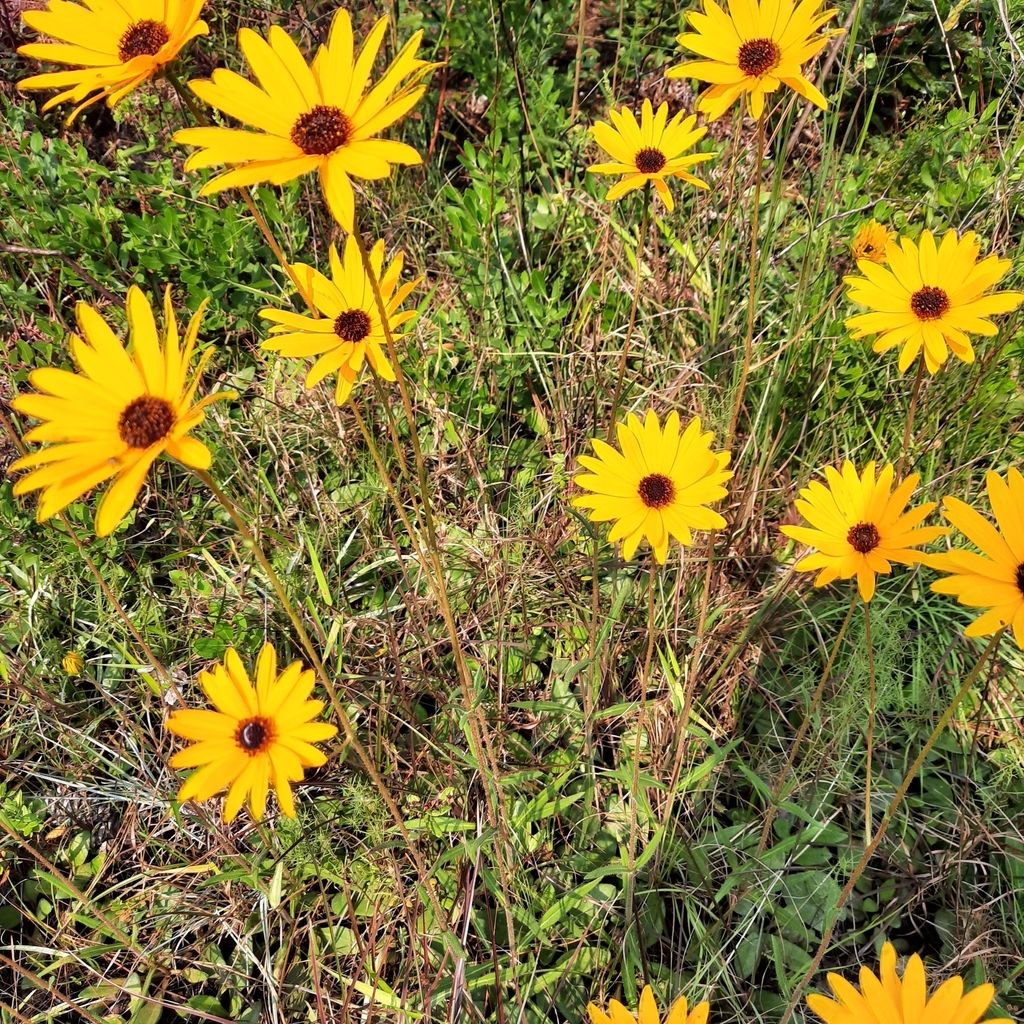
Helianthus heterophyllus – Wetland Sunflower
is a perennial sometimes as much as 4 feet tall, spreading by means of underground rhizomes. Leaves and stems are hairless or almost hairless. One plant can produce 1-5 flower heads, each with 12–18 yellow ray florets surrounding as least 100 red or brown disc florets. The species grows in wet sandy soils at low elevations.
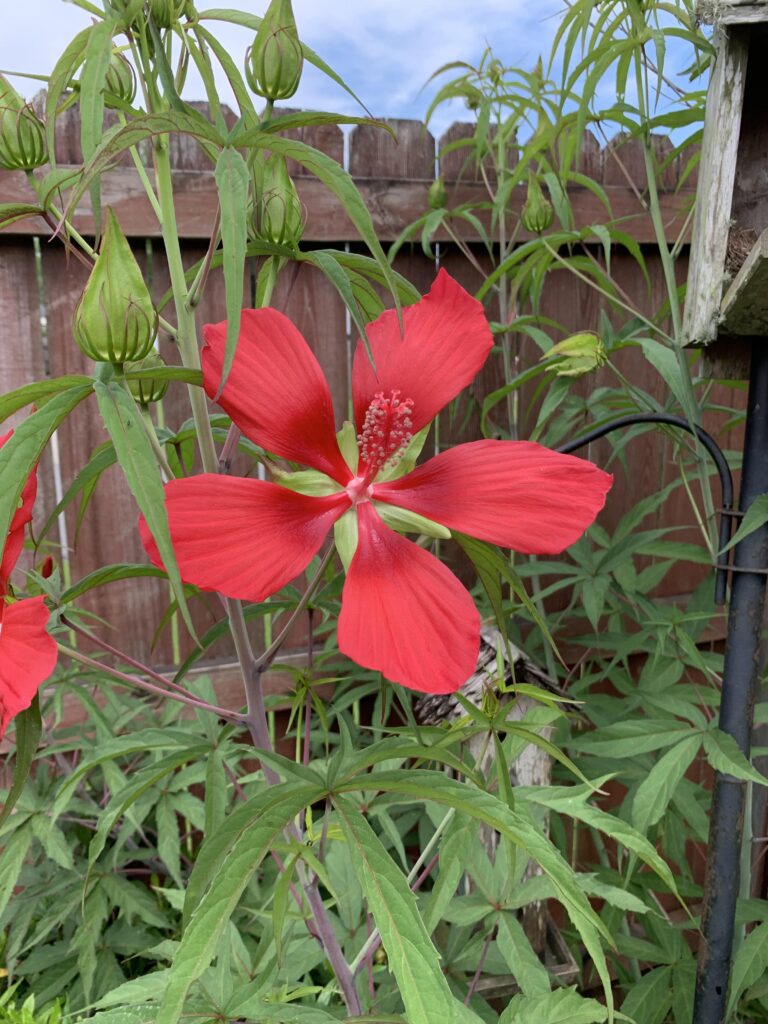
Hibiscus coccineus – Texas Star
The palmately divided leaves of this 4-7+ ft. rose-mallow are palmately cut and shiny. The flowers are deep-scarlet and over 6 in. in width. A large plant with big, showy, crimson flowers in upper leaf axils.
This very showy species, typical of the mallow family, is sometimes cultivated. It is certainly one of the loveliest of our native flowers.
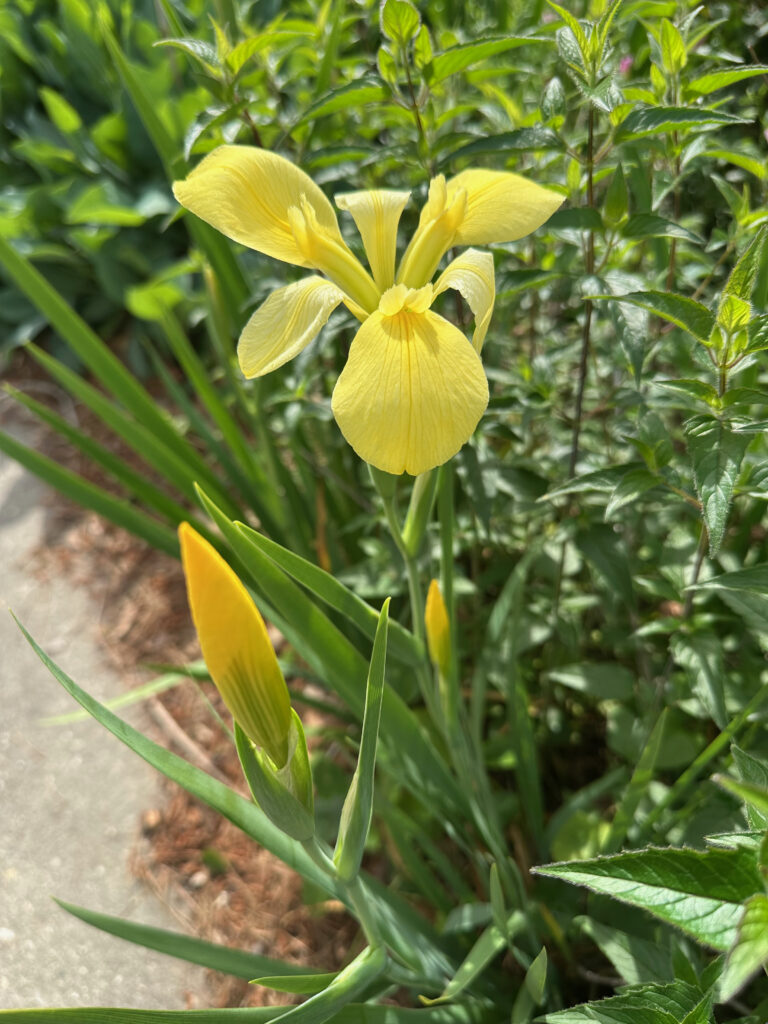
LA Iris spp – Briarwood Yellow
Louisiana Irises occur as scattered populations across the state in freshwater marshes, swamps, wet prairies, and other wetlands. They bloom March – April in a variety of colors, depending on species.
Louisiana irises are an excellent choice for naturalized landscapes, but also can be grown in raised beds if provided water during dry conditions. Irises support native caterpillars and birds; Iris fulva produces nectar used by hummingbirds.
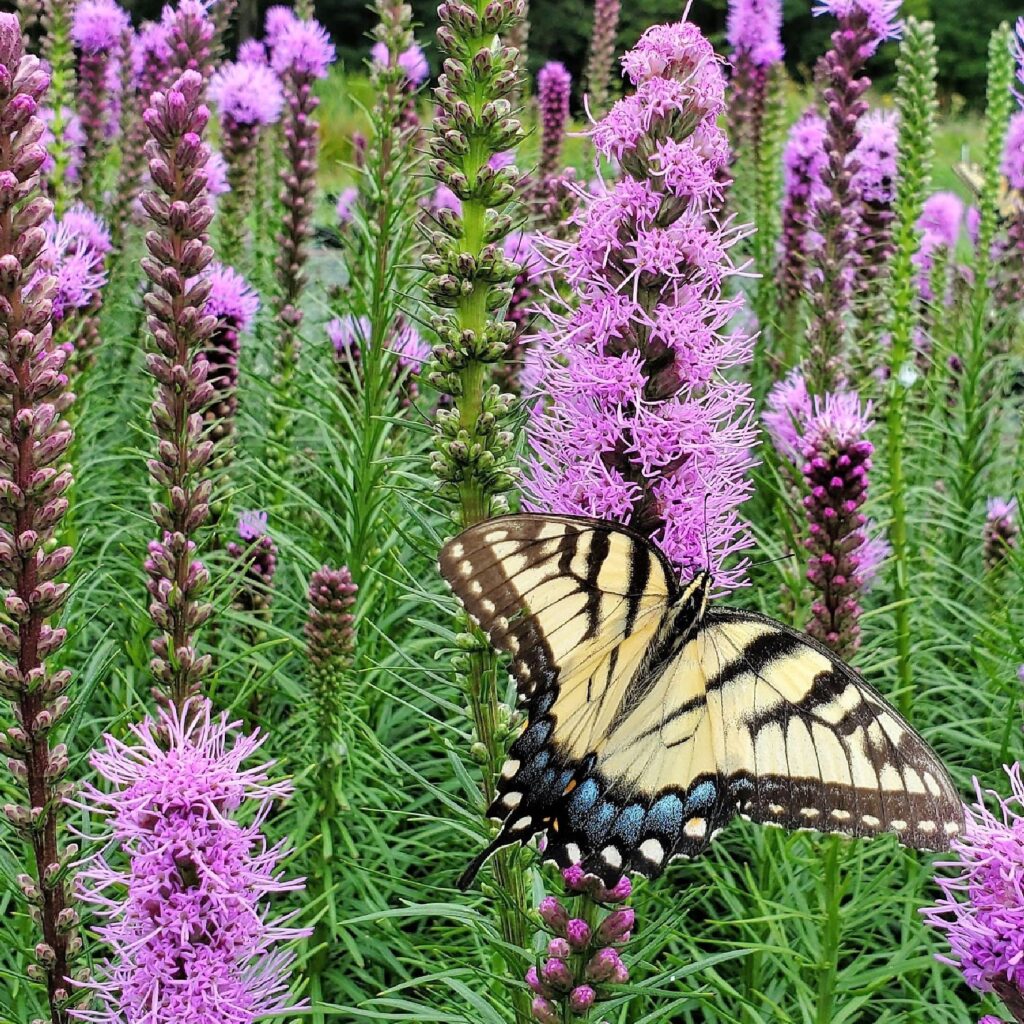
Liatris spicata – Dense Blazing Star
is an erect, slender perennial reaching a height of 2-6 ft. The linear, grass-like leaves are clumped toward the base of the plant, but extend up the stem to the showy flower cluster. A tall spike of rayless, rose-purple (sometimes white), closely set flower heads. The purple, tufted flower heads are arranged in a long, dense spike blooming from the top down.
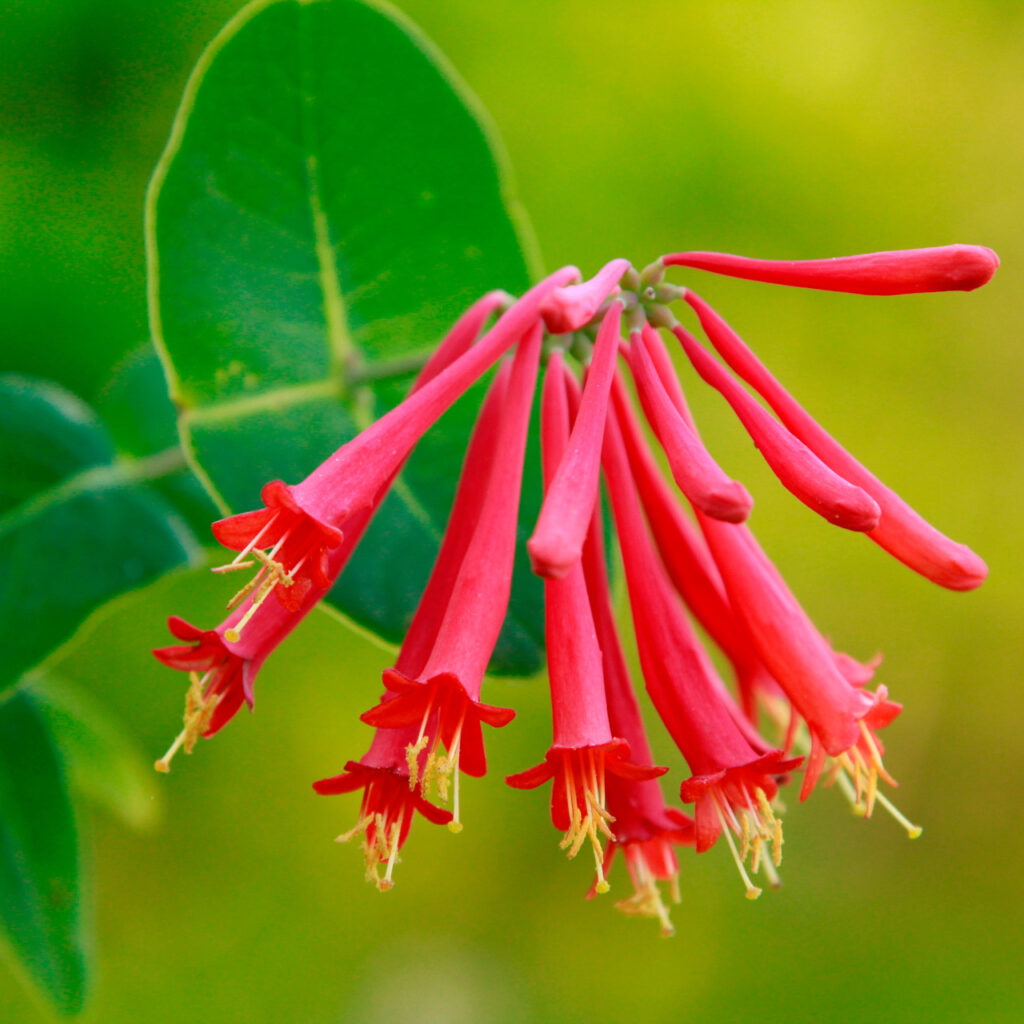
Lonicera sempervirens – Coral Honeysuckle
is a beautiful, slender, climbing vine is frequently visited by hummingbirds. Not too aggressive. Good climber or ground cover. The species name refers to its evergreen habit, especially in the South. Rich soil preferred in sun to part shade. Flowers attract hummingbirds, bees and butterflies. Fruits attract quail, Purple Finch, Goldfinch, Hermit Thrush and American Robin.
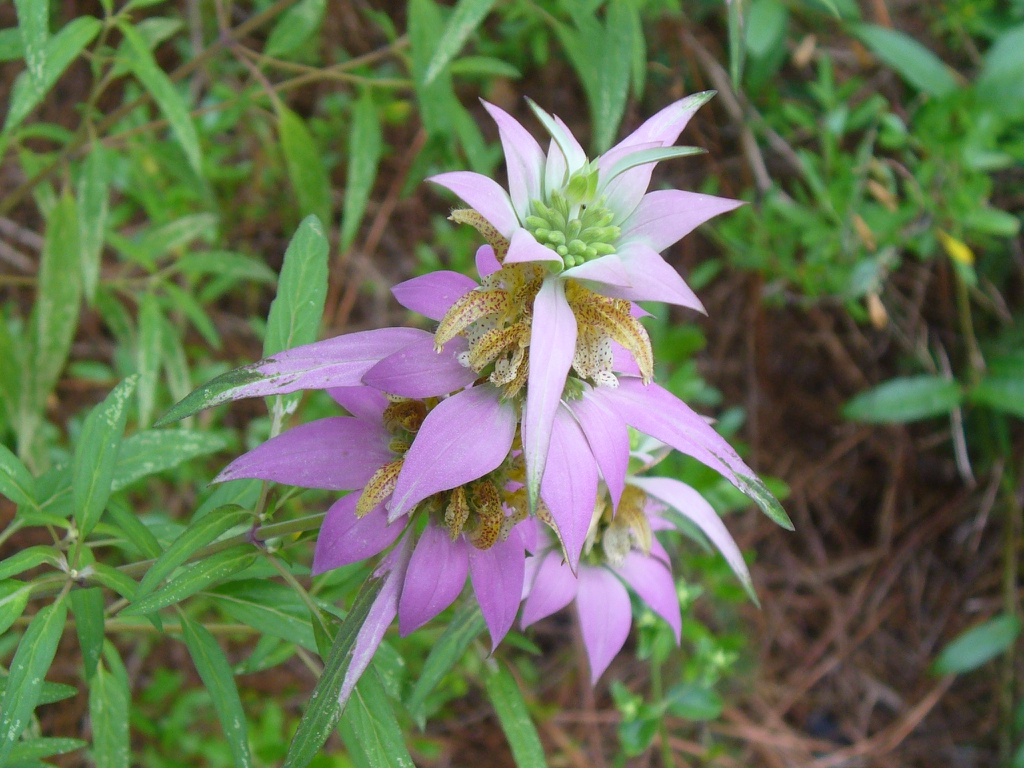
Monarda punctata – Spotted Bee Balm
is an aromatic, erect perennial ranging from only 6 in. to almost 3 ft. tall. Rosettes of yellowish, purple-spotted, tubular flowers occur in whorls, forming a dense, elongated spike at the end of the stem or from leaf axils. Each whorl is subtended by large, conspicuous, whitish, purple-tinged, leaf-like bracts.
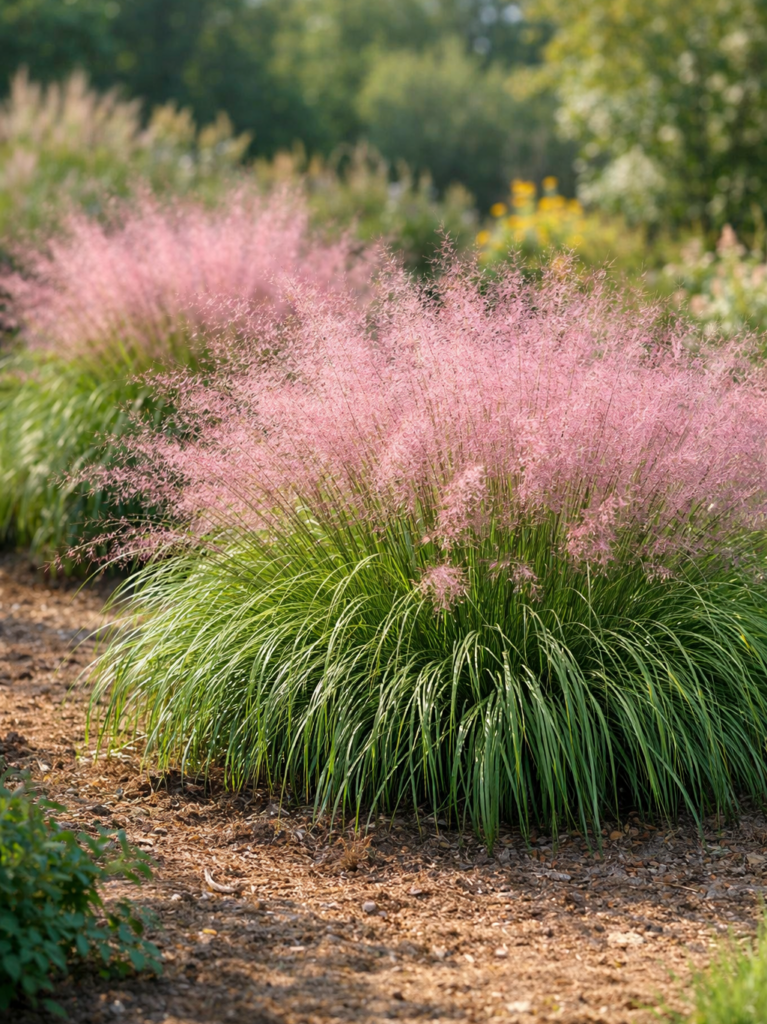
Muhlenbergia capillaris – Muhly Grass
is an easy-to-grow grass. It is unfussy about soil type, as long as it is well-drained. Give it plenty of sunshine for the best floral display. Muhly grass tolerates heat, humidity, drought and poor soil and is highly salt-tolerant.
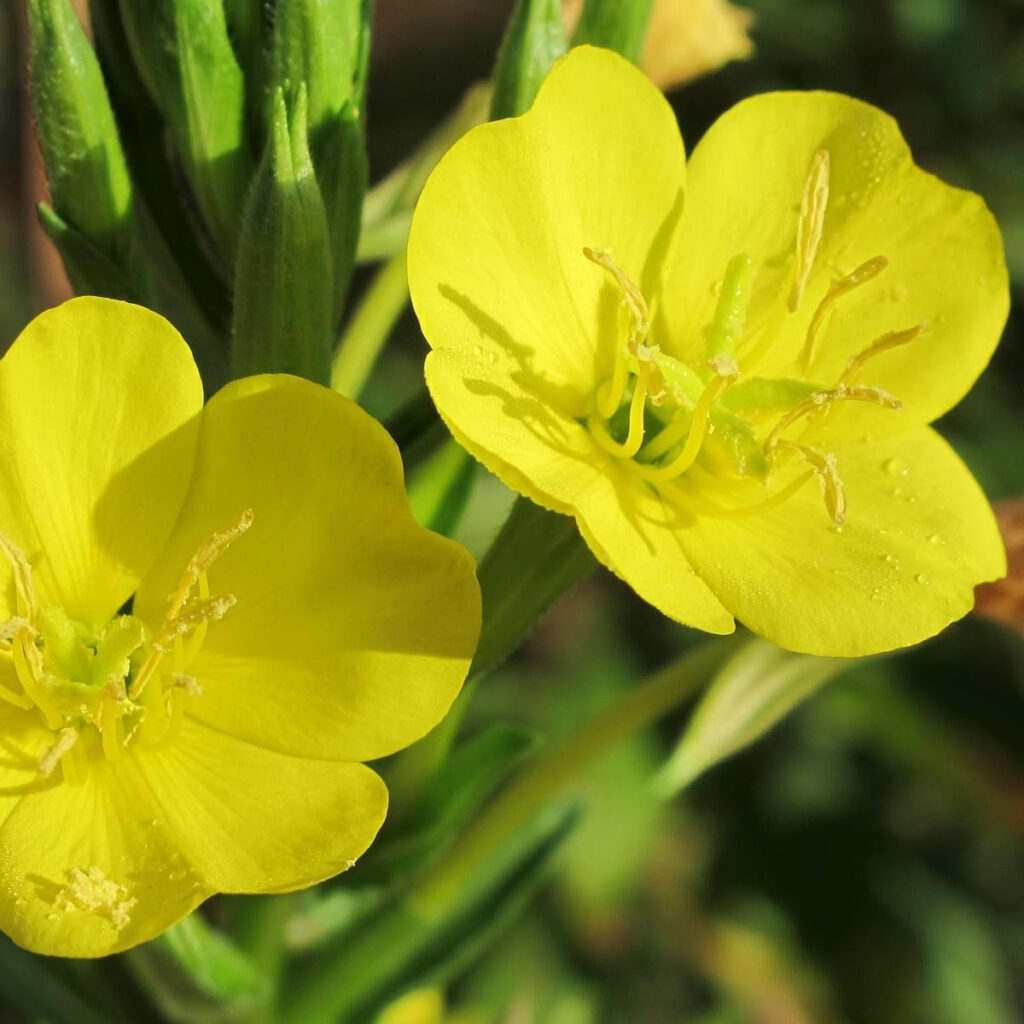
Oenothera biennis – Evening Primrose
in its first year, the plant forms a flat rosette of lance-shaped leaves that hug the ground, building energy reserves in its substantial taproot. During the second year, it sends up a tall flowering stem that can reach 2 to 8 feet in height, crowned with dozens of bright yellow blooms that open sequentially from bottom to top throughout the summer and early fall. This dramatic transformation from ground-hugging rosette to towering flower spike makes Evening Primrose one of the most architecturally striking plants in the North American flora.
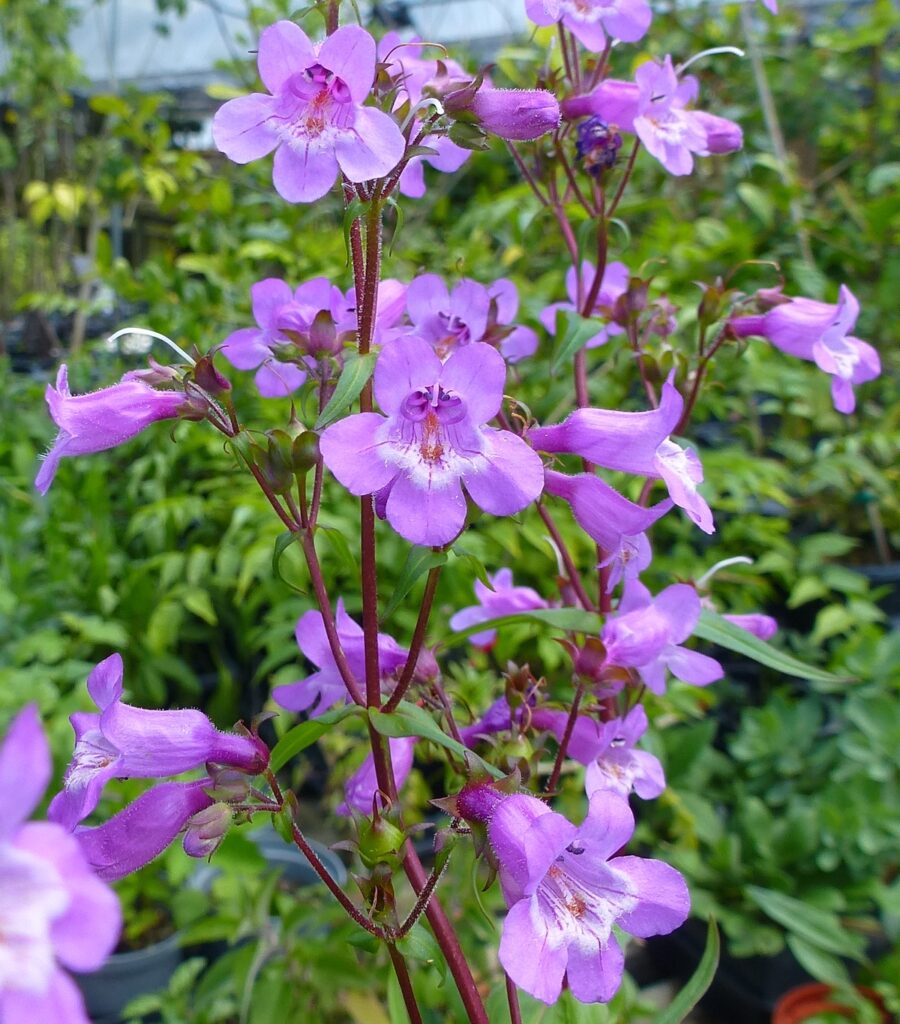
Penstemon tenuis – Gulf Coast Penstemon
is native to coastal and riverine environments in southeastern North America from southeastern Texas to Mississippi and north to Arkansas, it grows well in moist perennial beds and borders, where it has the potential to reseed freely.
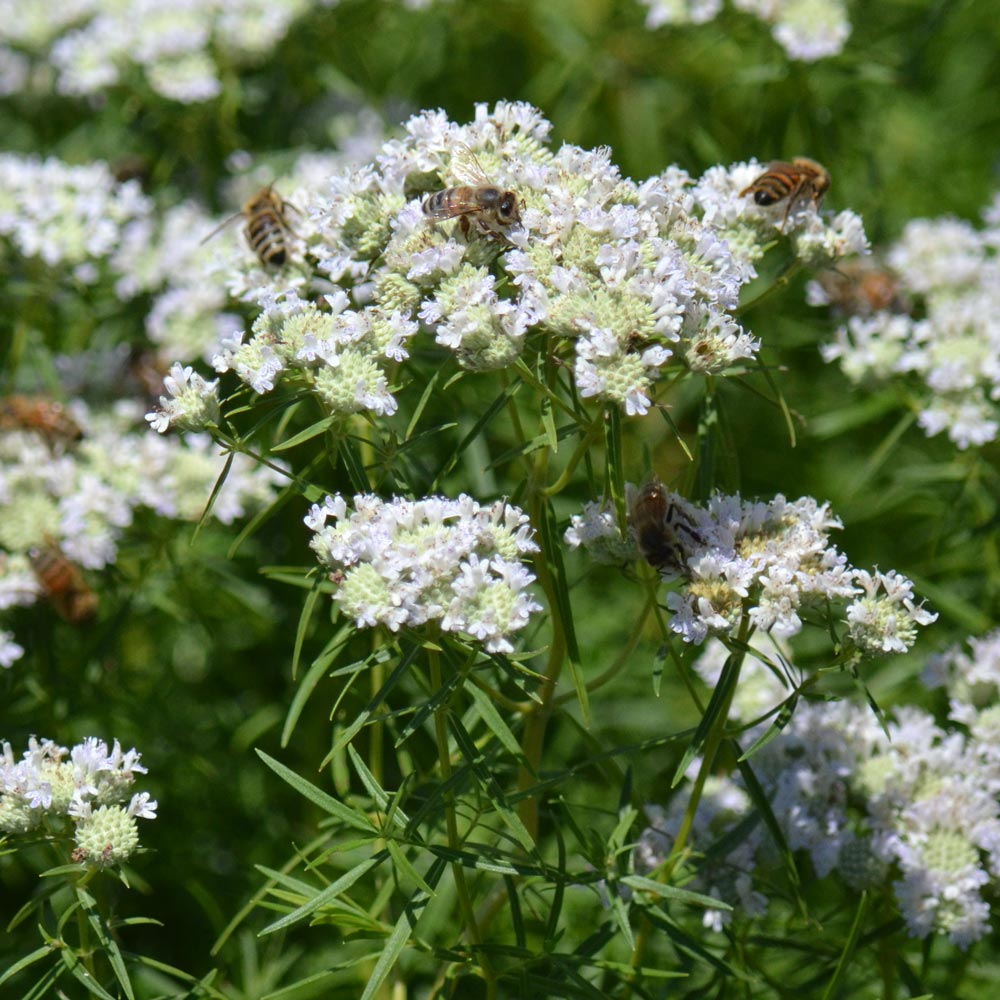
Pycnanthemum tenuifolium – Mountain Mint
grows in full to partial sun in all types of soil. It prefers good drainage. It can tolerate occasional dry or wet conditions. Mountain mint grows in a clumping form to a height of 2 feet, but it can grow up to 4 feet. The flowers are clusters of many small, two-lipped corollas ranging from whitish to lavender with purple spots. Blooms start when the plant reaches a width of approximately 1 foot wide, and they attract native bees, bumblebees and honey bees.
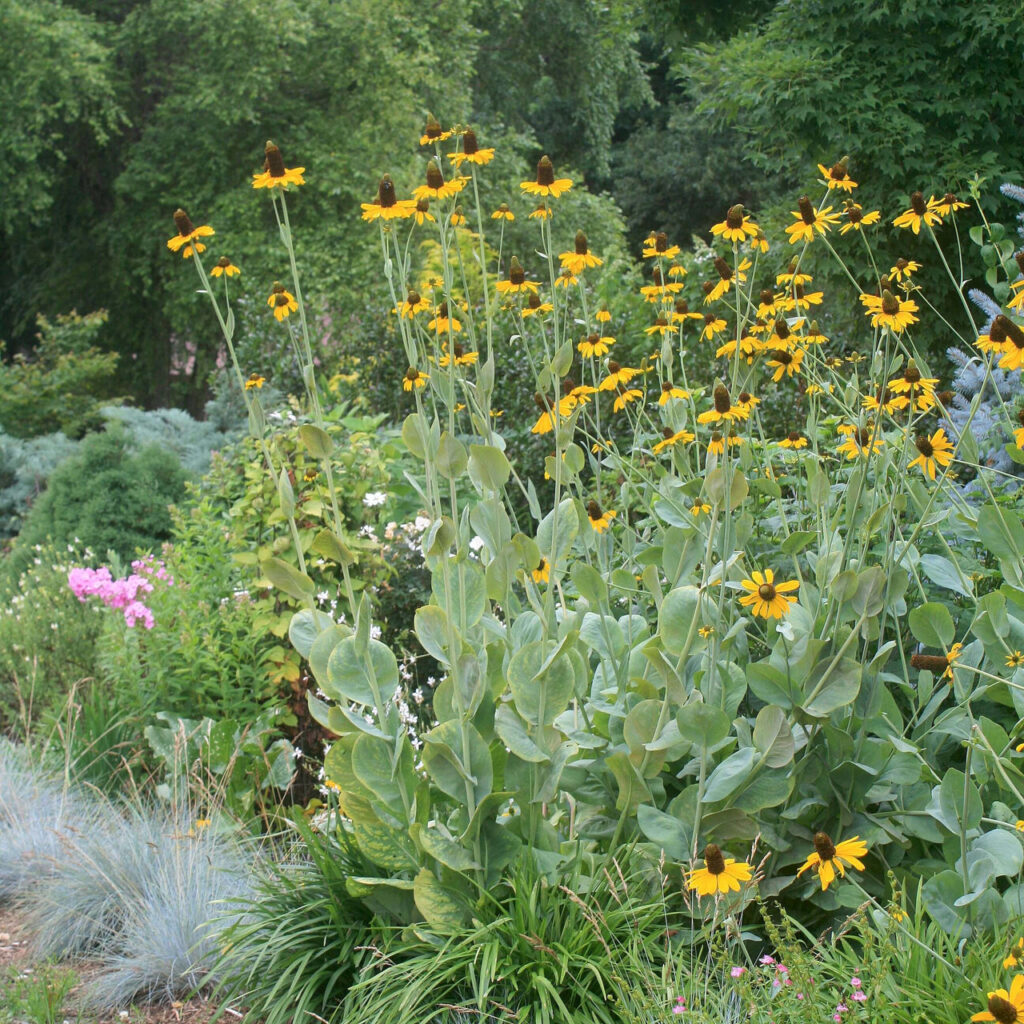
Rudbeckia maxima – Giant Coneflower
has clumps of silvery-blue foliage that give rise to stately flower stalks. The flowers have intense yellow ray flowers that dangle from tall brown centers. It should be cut back to the base after blooming to keep tidy and be planted in mass for best effect in landscapes.
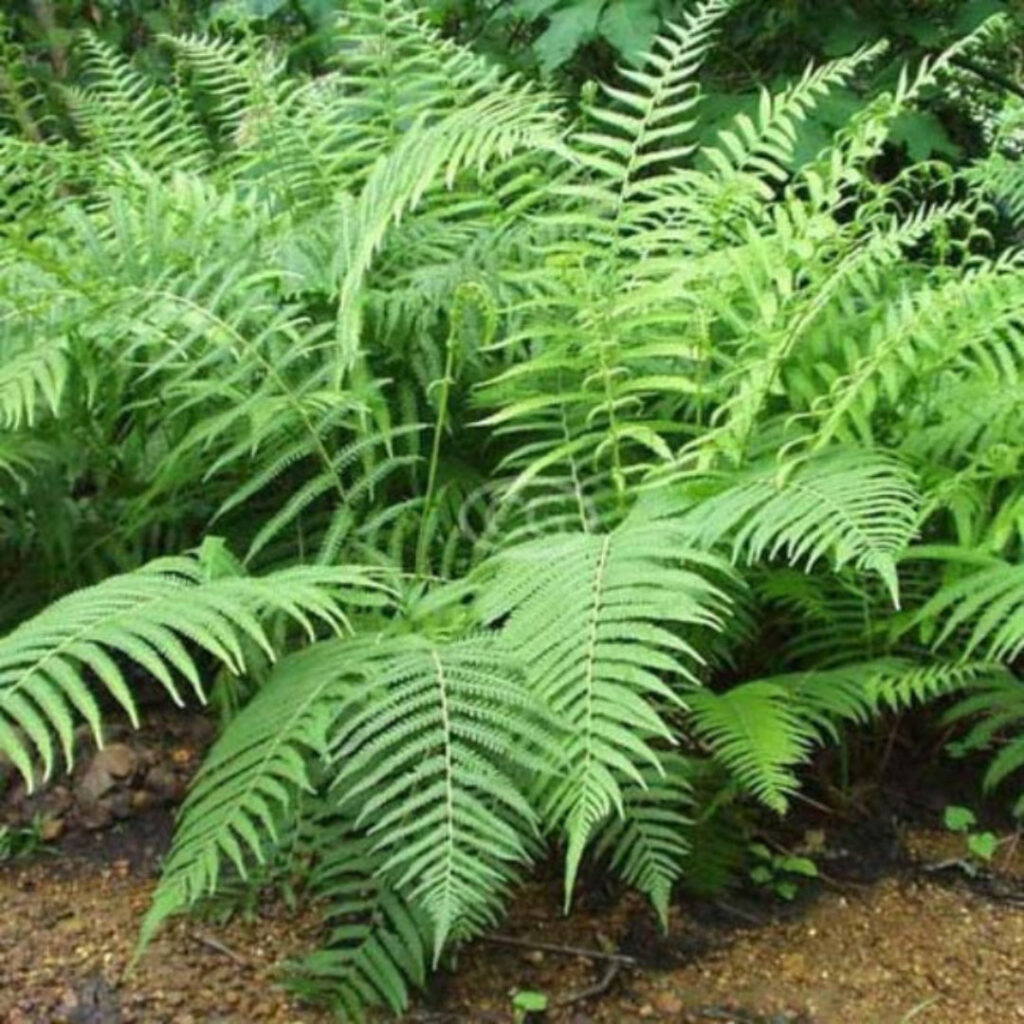
Thelypteris kunthii – Wood Fern
The gracefully arching fronds of this fern are lime to medium-green in color and grow 2-3 ft. high by 8-12 in. wide. The fronds reach in all directions from clusters of stalks occuring at intervals along the rhizome. The foliage is almost twice cut and taper to a point. The species takes on a bronze cast as winter approaches. Grow in part shade to shade in moist soil. Poor drainage is ok.
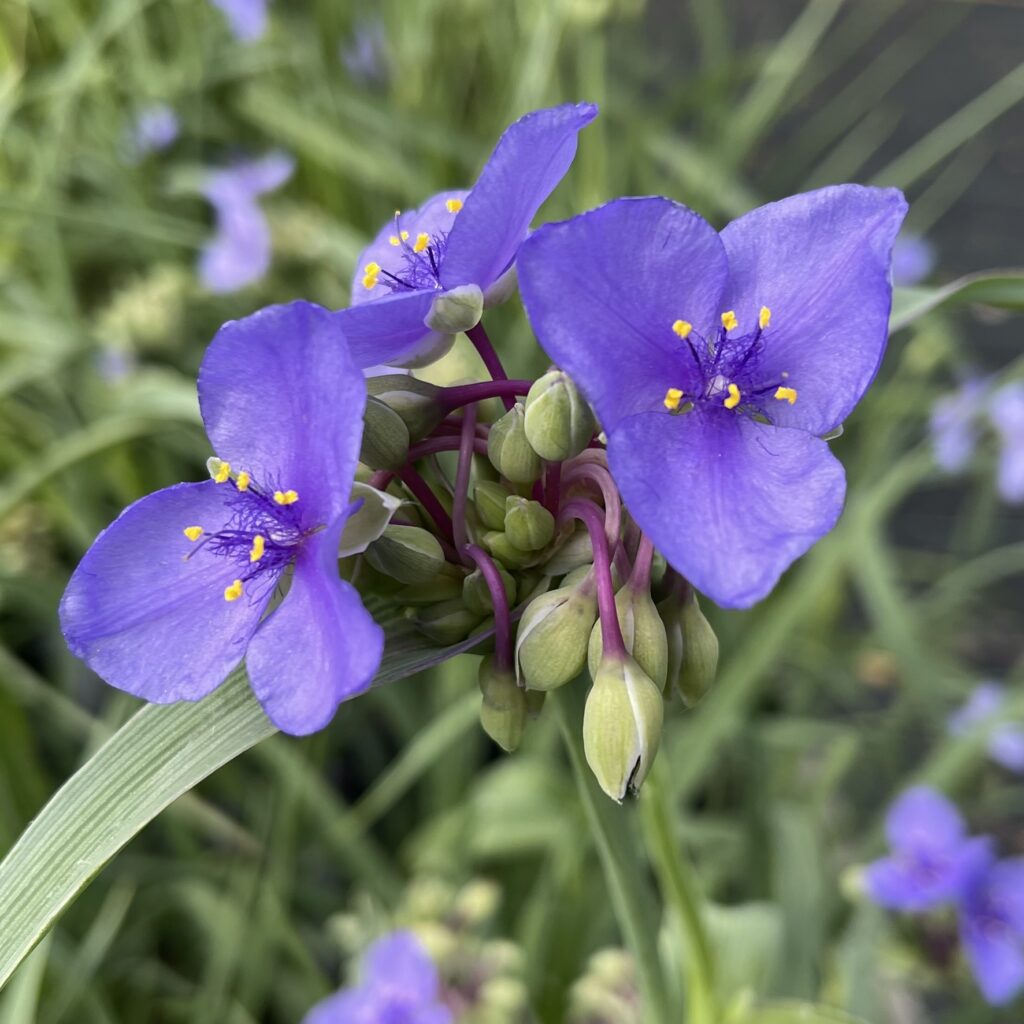
Tradescantia virginiana – Spiderwort
is a clump-forming herbaceous perennial which grows up to 3′ tall. Violet-blue to purple, three-petaled flowers (.75-1.5″ diameter) accented by contrasting yellow stamens open up, a few at a time, each for only one day, from terminal clusters (umbels) containing numerous flower buds. Flowers bloom in succession from late May into early July. Arching, iris-like, dark green leaves up to 1′ long and 1 inch wide are folded lengthwise forming a groove.
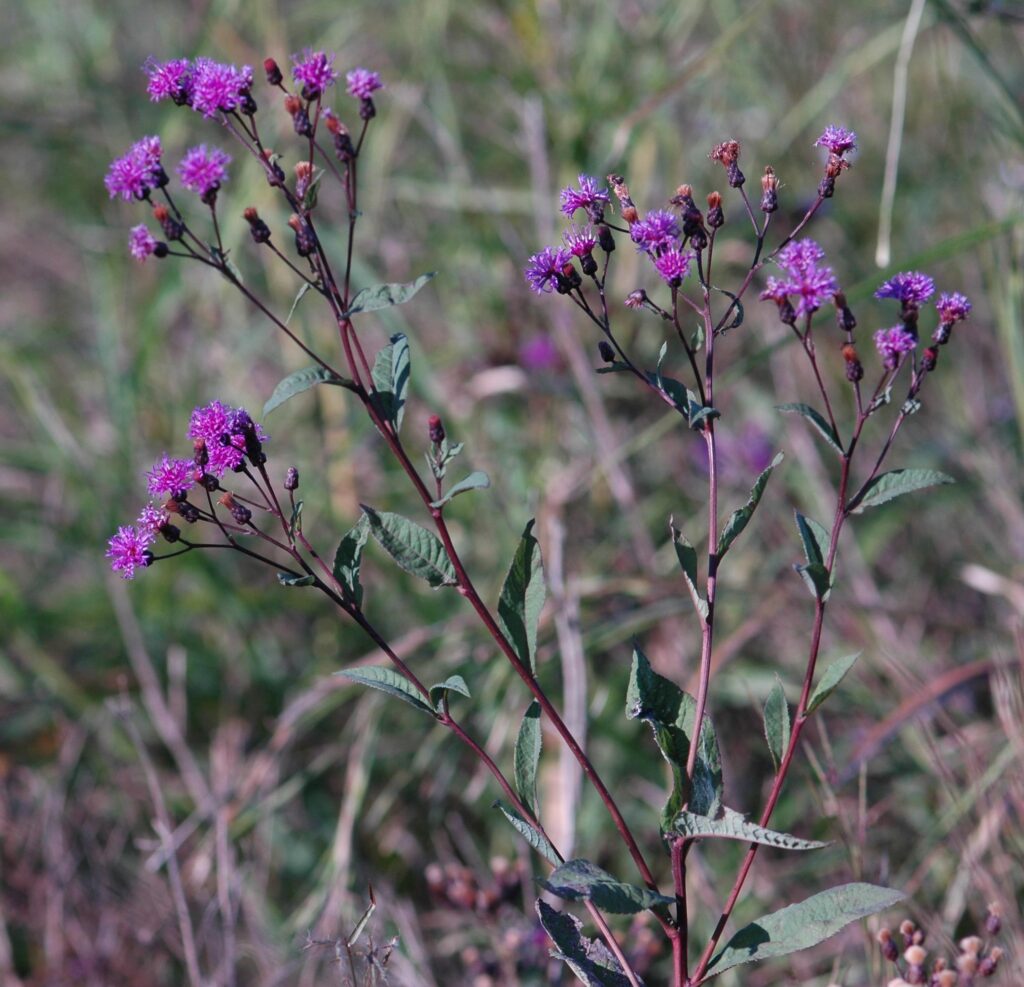
Vernonia gigantea – Ironweed
can be easily grown in a cottage garden, wildflower garden, or pollinator garden. Due to its height, it is best planted in the back of a border garden. It will compete with other plants in the garden and can become weedy if not controlled. It prefers full sun to partial shade and well-drained moist to wet soils. Butterflies and bees are attracted to this pollinator plant.
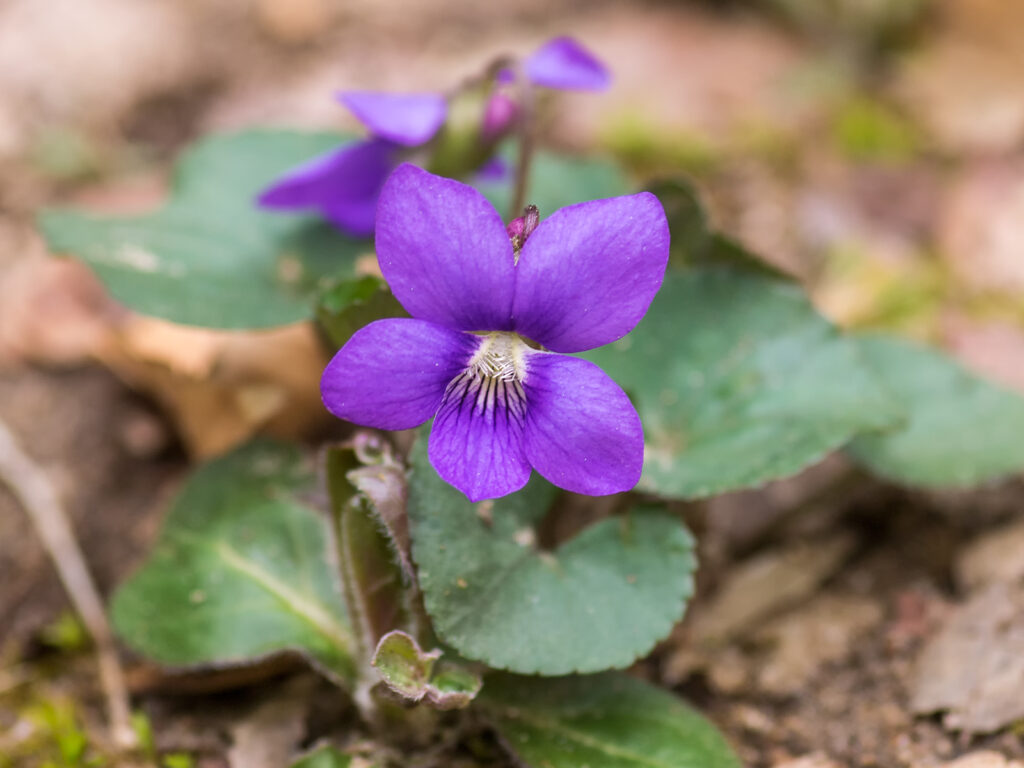
Viola sororia – Blue Violet
prefers moist, rich soils and dappled sunlight. However, it will grow in many light conditions and tolerate wet soil, clay soil. It also freely self-seeds and may become weedy in fertile, moist locations. During hot summer months, the foliage tends to deteriorate.